Times:2026-07-06 15:25 Popularity:48
Article Abstract
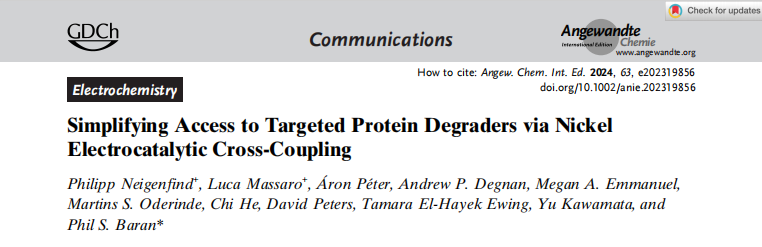
Targeted protein degradation technologies (such as PROTACs and CELMoDs) represent cutting-edge therapeutics for cancer, neurodegenerative diseases and other disorders. However, conventional synthetic routes for their core structural glutarimide bearing C3(sp³)-C(sp²) linkages rely on multi-step, high-cost palladium-catalyzed processes with low yields ranging only from 4% to 75%.
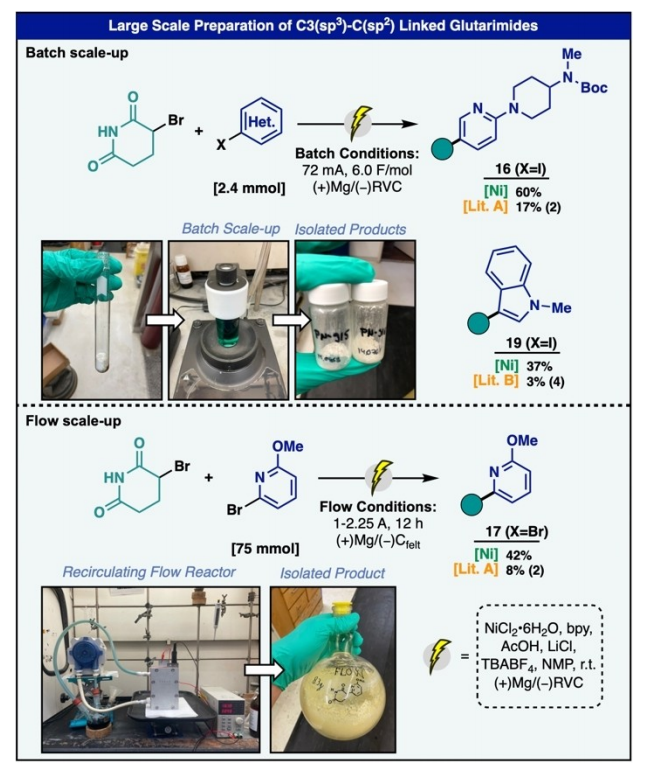
In their latest research published in Angewandte Chemie, the group led by Prof. Phil S. S. Baran at Scripps Research developed a nickel electrocatalytic cross-coupling (GCC) strategy. Using our diaphragm-free lab-scale plate-and-frame electrolyzer, the team realized the direct cross-coupling of α-bromoglutarimides with (hetero)aryl halides for the first time, delivering a single-step yield up to 84%. This breakthrough opens a brand-new route for the development of protein degraders.
Four Core Technical Advantages
✅ Single-step synthesis: The traditional 2–4 step workflow is condensed into one single step, cutting costs by over 50% (catalyst cost reduced from $5.00/g to $0.02/g).
✅ Green and high-efficiency: Reactions proceed at room temperature without rigorous oxygen/water exclusion, greatly improving atom economy.
✅ Broad substrate compatibility: Successfully applied to the synthesis of precursors for 23 known protein degraders, including clinical candidate molecules such as pomalidomide derivatives.
✅ Scalable performance: Gram-scale preparation is achievable via batch or flow chemistry, fully compatible with industrialization requirements.
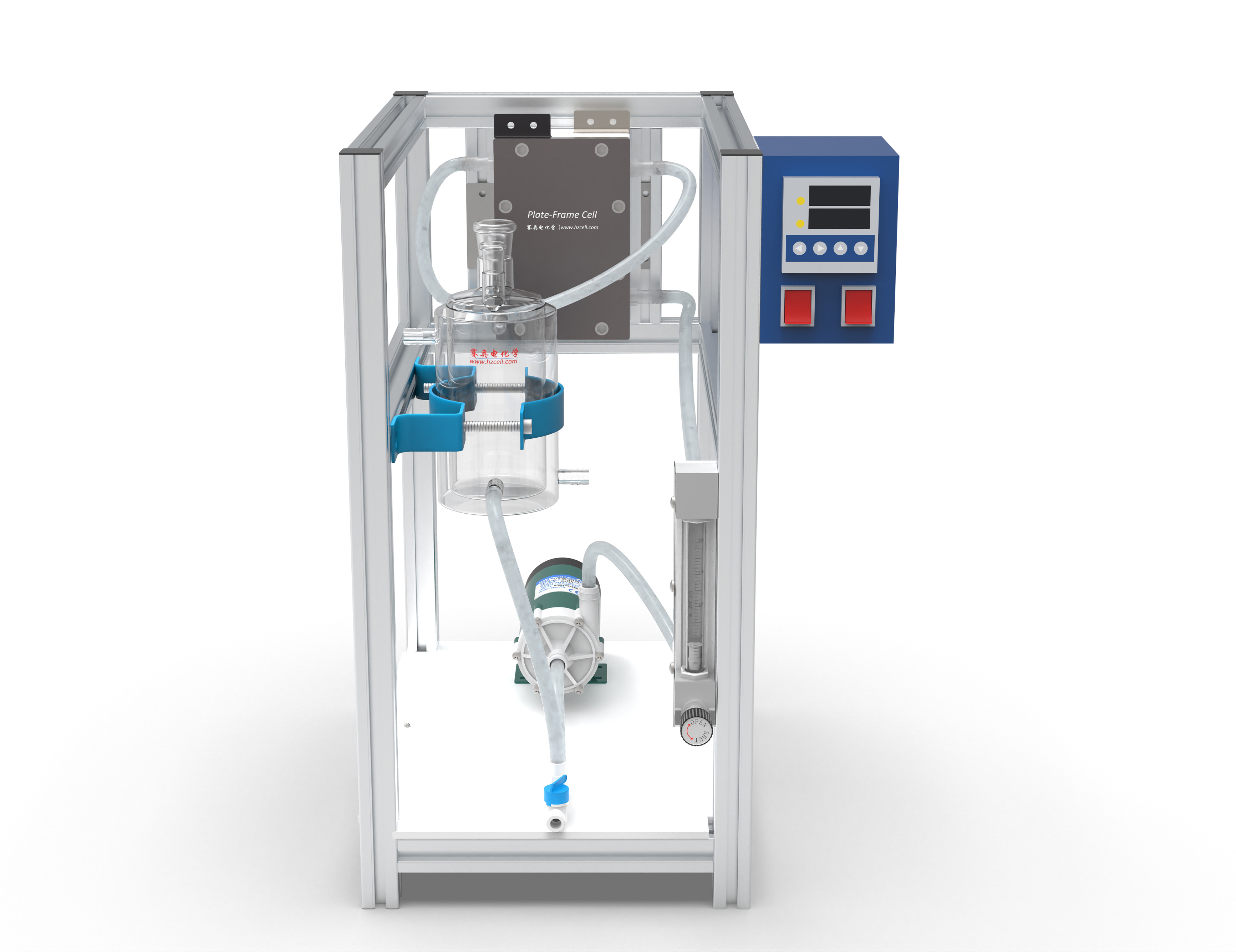
Introduction to Diaphragm-Free Plate-and-Frame Electrolyzer



Copyright © 2026-2027 Hangzhou Saio Electrolytic Technology Co., Ltd. All rights reserved
Address: Room 1503-8, Building 1, Haozhang Building, Gongshu District, Hangzhou City, Zhejiang Province

 浙公网安备33010502013592号