In 1964, American chemist Manuel M. Baizer invented a revolutionary electrochemical‑synthesis method: electrons replaced chemical reagents to “stitch” acrylonitrile into adiponitrile. Monsanto rapidly industrialized this technology, creating one of the most successful commercial cases in the history of organic electrosynthesis. One critical piece of equipment that made this achievement possible is the
capillary‑gap cell.Evolving from BASF’s 1971 patent (US 3,616,320) to sophisticated benchtop laboratory instruments today, the capillary‑gap cell has spanned more than half a century of development. What exactly is it? Why does “smaller gap equal higher efficiency”? This article walks you through the technology.
1. What Is a Capillary‑Gap Cell?
Simply put, a capillary‑gap cell (Figure 1) features a specially‑designed electrolyzer defined by an extremely narrow gap between anode and cathode — typically 0.05‑2 mm, roughly the thickness of one or two sheets of A4 paper. Electrolyte flows as a thin liquid film through the gap between these face‑to‑face electrodes, similar to water flowing between two parallel glass plates.This design originates from a fundamental electrochemical principle: the closer the electrodes, the lower the electrolyte resistance (ohmic drop), the less electrical‑energy waste, and the higher the reaction efficiency. It is analogous to shortening a highway between two cities: shorter distance yields lower energy consumption.In practical hardware, multiple plate‑type electrode pairs are stacked in series. Electrolyte flows sequentially through each inter‑electrode gap. This series‑stacked configuration enlarges the total reactive area while preserving the ultra‑narrow inter‑electrode distance — this is the core essence of the capillary‑gap concept.
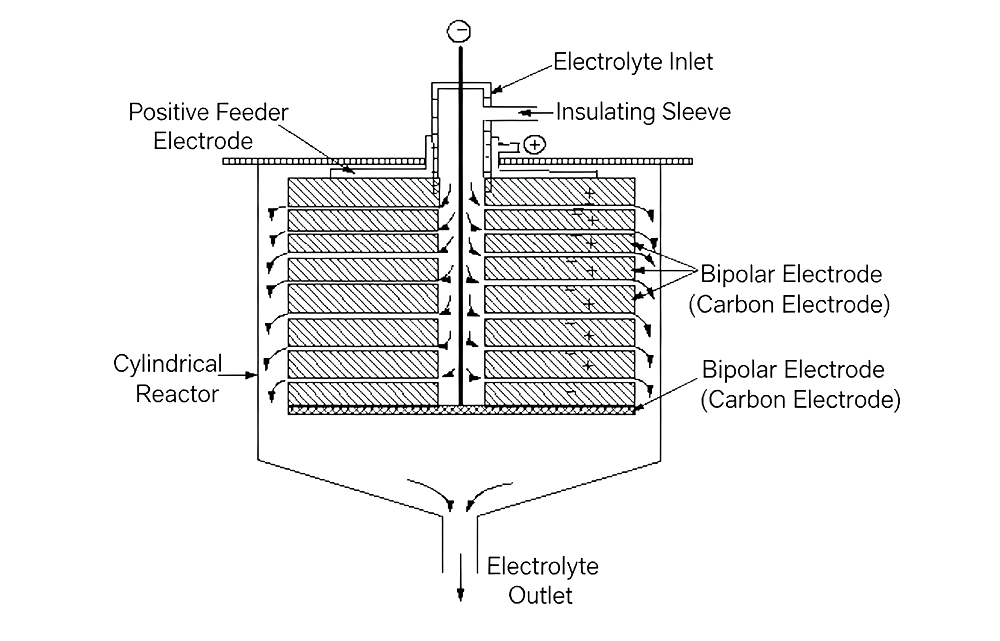
(Figure 1: Schematic diagram of capillary‑gap cell)
2. From Lab‑Scale to Industrialization: Technical Evolution of Capillary‑Gap Cells
The capillary‑gap cell was not a one‑off invention. It matured gradually alongside organic electrosynthesis as it transitioned from laboratory research to industrial manufacturing. Key milestones are listed below:
1963 · Baizer’s Breakthrough Manuel M. Baizer deployed quaternary ammonium salts (e.g., tetraethylammonium p‑toluenesulfonate) as supporting electrolytes with lead or mercury cathodes. He successfully realized the electrochemical hydrodimerization of acrylonitrile to adiponitrile with drastically improved current efficiency, meeting the threshold for industrial deployment.
1965 · Monsanto Industrialization Monsanto commissioned an adiponitrile electrolysis plant in Decatur, USA, adopting Baizer’s technology. This marked the dawn of large‑scale industrial organic electrosynthesis. Companies including Asahi Kasei (Japan) and BASF (Germany) followed with their own developments.
1971 · BASF Patent US 3,616,320 Fritz Beck and Hans Leitner from BASF filed the landmark capillary‑gap‑cell patent. It defined the technical scheme: liquid‑tight electrodes + 0.05‑2 mm inter‑electrode gap + capillary‑mode electrolyte flow. High space‑time yield was achieved at low current density, with an energy consumption of only 2.61 kWh per kilogram of adiponitrile.
21st Century · Revival of Organic Electrosynthesis Driven by green‑chemistry concepts and improved electrochemical hardware, organic electrosynthesis was included in IUPAC’s
Top Ten Emerging Technologies in Chemistry 2023. As core hardware, capillary‑gap cells are gaining renewed traction for pharmaceutical intermediates, agrochemical intermediates, and fine‑chemical manufacturing.
3. Why “Smaller Gap Is Better” — Core‑Principle Analysis
During electrolysis, the overall cell voltage consists of three components:
Cell Voltage = Thermodynamic Potential + Activation Overpotential + Ohmic Drop Ohmic Drop = Current Density × Electrolyte Resistance × Electrode‑to‑Electrode GapThe ohmic‑drop term is proportional to electrode spacing. Larger gaps raise resistance, and more electricity is wasted heating the electrolyte. In conventional electrolyzers with centimeter‑scale gaps, ohmic drop can account for over 50 % of total cell voltage.Capillary‑gap cells compress the gap down to 0.05‑2 mm, 1/10 to 1/100 of traditional cell spacing. According to BASF patent data, six stacked electrode pairs give a total voltage of only 23.4 V (3.9 V per pair), whereas comparable vibrating‑electrode set‑ups require 4.5 V to deliver identical current density.
Four Core Advantages
- Minimal ohmic drop, high energy‑utilization efficiency Reducing electrode spacing from centimeter‑ to sub‑millimeter scale greatly lowers electrolyte resistance. Patent data show each electrode pair operates at merely 3.8‑5.0 V for current densities of 1‑20 A/dm². More electrical energy feeds the target reaction instead of dissipating as resistive heat.
- Enhanced mass transfer, uniform reaction performance Electrolyte flows as thin films through narrow gaps. Mass‑transfer distances are short; reactants rapidly reach electrode surfaces, and products are quickly swept away.
- Low supporting‑electrolyte loading, optimized cost‑separation workflow Conventional undivided electrolysis demands large quantities of expensive quaternary‑ammonium supporting salts to suppress resistance, which complicates downstream product isolation. Thanks to intrinsically low cell resistance, capillary‑gap systems operate reliably with only ~1 wt % supporting‑electrolyte salt, cutting raw‑material costs and post‑processing burdens.
- Scalable stacking: scale‑up by number, not by dimension Production capacity is expanded by adding more electrode pairs rather than enlarging individual electrode size. This “number‑based scale‑up” avoids typical drawbacks of conventional electrolyzer scaling such as deteriorated mass transfer and uneven current distribution. Consistent reaction performance is maintained from lab to industrial scale.
4. Classic Case: Adiponitrile Synthesis in the BASF Patent
The US patent US 3,616,320 granted in 1971 represents a milestone for capillary‑gap‑cell technology. Inventors Fritz Beck and Hans Leitner (BASF) detailed the electrolytic conversion of acrylonitrile to adiponitrile, a key intermediate for nylon‑66 fibers.Reaction: Two acrylonitrile molecules accept electrons at the cathode and undergo dimerization to form adiponitrile: \(\ce{2 CH2=CH‑CN + 2H2O + 2e- → NC‑(CH2)4‑CN + 2OH-}\)Example 1 within the patent describes a notable experiment: six stacked graphite electrode pairs with 0.5 mm gap; lead‑oxide catalytic layer (190 μm thick) coated on anodes. Electrolyte composition: 55 % acrylonitrile, 28 % isopropanol, 16 % water, and only 1 % tetraethylammonium ethyl sulfate (TEAES). At 30 °C and 10 A/dm²:
- Maximum adiponitrile yield: 87.5 % (with BF₃ sparging)
- Current efficiency: 83 % (standard conditions)
- Energy consumption: 2.61 kWh/kg adiponitrile
The patent systematically investigated influences on reaction selectivity including cathode materials (graphite, amalgamated lead, copper etc.), pH (1‑8), current density (1‑20 A/dm²), and theoretical current conversion ratios (30‑70 %). The systematic process dataset laid solid foundations for subsequent industrialization.
5. Beyond Adiponitrile: Modern‑Day Applications of Capillary‑Gap Cells
Half‑a‑century later, capillary‑gap cells are no longer limited to adiponitrile manufacturing and have become vital hardware within organic electrosynthesis:
- Fine‑chemical synthesis: e.g., electro‑oxidative synthesis of anisaldehyde dimethyl acetal. Research demonstrates 75 % product yield and 47 % current efficiency using a quasi‑capillary‑gap cell with graphite anode and sodium p‑toluenesulfonate as supporting electrolyte.
- Pharmaceutical‑intermediate synthesis: Electrochemistry delivers mild conditions and high selectivity, well‑suited for drug‑intermediate manufacturing.
- Green‑chemistry benefits: Electrons serve as traceless reagents; toxic chemical oxidants/reductants are eliminated, lowering hazardous‑waste generation at source. Mild operating conditions and high selectivity afford superior atom‑economy compared with traditional chemical routes. Organic electrosynthesis is featured in IUPAC’s Top Ten Emerging Technologies in Chemistry 2023.
6. Comparison: Capillary‑Gap Cell versus Conventional Electrolyze
| Comparison Item | Conventional Electrolyzer | Capillary‑Gap Cell |
|---|
| Electrode gap | Centimeter‑scale (10‑50 mm) | 0.05‑2 mm |
| Ohmic drop | High (>50 % of cell voltage) | Very low (3.8‑5 V per electrode pair) |
| Supporting‑electrolyte loading | High (10‑40 wt %) | Very low (~1 wt %) |
| Specific surface area | 10‑100 m²/m³ | 1000‑10000 m²/m³ |
| Mass‑transfer performance | Limited by diffusion distance | Thin‑film flow, fast mass transfer |
| Scale‑up strategy | Larger electrode dimensions (mass‑transfer degradation) | Increase electrode‑pair count (preserved performance) |
| Energy consumption | High | Low (2.61 kWh/kg) |
7. Outlook: Broad Prospects for Organic Electrosynthesis
Organic electrosynthesis substitutes conventional chemical oxidants and reductants with electrons, mitigating hazardous‑waste formation from the source. It is celebrated as one of the “greenest” chemical technologies. With low energy consumption, excellent mass‑transfer properties and high selectivity, capillary‑gap cells exhibit huge application potential for pharmaceutical‑ and agrochemical‑intermediate production.For pharmaceutical‑intermediate manufacture, constructing molecular scaffolds for many active‑pharmaceutical ingredients relies on complex redox transformations. Traditional synthetic routes often deploy costly, harmful metallic oxidants or reductants, bringing high expense, poor atom‑economy and heavy‑environmental burdens. Capillary‑gap cells deliver cleaner alternatives. Precisely‑controlled electrode potential enables selective functional‑group transformation and suppresses over‑oxidation and side reactions. Electrochemical pathways have demonstrated superior yield and selectivity for nitrogen‑containing heterocyclic intermediates and chiral‑alcohol intermediates.For agrochemical‑intermediate production, electrochemistry also shows great promise. Many high‑efficiency, low‑toxicity agrochemicals require elaborate molecular‑structure construction. Conventional workflows suffer from long synthetic sequences, low yields and heavy pollution. The mild reaction environment and accurate potential control of capillary‑gap cells open new technical avenues for efficient, green agrochemical‑intermediate synthesis, promising shorter process chains and reduced waste discharge.From Baizer’s landmark achievement in 1963, to the 0.5 mm gap in the 1971 BASF patent, to widespread modern‑day deployment for pharmaceutical and agrochemical intermediates — the evolution of capillary‑gap cells is a story of continuously shrinking electrode gaps. Every gap reduction brings higher efficiency, lower energy use and a greener chemical future.
Product Recommendation
To accelerate translation of electrochemical‑synthesis discoveries from laboratory‑scale to industrial‑scale, Hangzhou Saiao Electrolysis Technology Co., Ltd. (
www.hzcell.com) has developed a lab‑scale capillary‑gap electrolyzer and supporting hardware after repeated testing and iterative upgrading (Figure 1).Bench‑test results: Electro‑oxidation of 2‑methylfuran to 2‑methyl‑2,5‑dimethoxy‑2,5‑dihydrofuran achieves 99 % conversion, 93 % yield, 50 mA/cm² current density, 92 % current efficiency at 3.8 V single‑cell voltage. The auxiliary set‑up adopts ergonomic design.
(Figure 1: Lab‑scale capillary‑gap electrolyzer and supporting hardware)References
[1] US Patent 3,616,320, Production of Adiponitrile, F. Beck, H. Leitner, BASF, 1971.
[2] Baizer, M. M., Electrolytic Reductive Coupling, J. Electrochem. Soc., 111, 215, 1964.
[3] Advances in Electrosynthesis of Adiponitrile, Chemical Industry and Engineering Progress.
[4] Direct Electro‑oxidative Synthesis of Anisaldehyde Dimethyl Acetal in Quasi‑Capillary‑Gap Reactor, Journal of Chemical Industry and Engineering (China), 65(6), 2193, 2014.
[5] IUPAC, Top Ten Emerging Technologies in Chemistry 2023.
[6] Green Electrochemical Synthesis, Edited by Ma Chun‑an, et al.
[7] Capillary‑gap reactor product page, hzcell.com




 浙公网安备33010502013592号